
Performance · Sydney climate

Single vs double-glazed windows.

A practical comparison for Sydney homes - comfort, energy bills, noise reduction and cost. Which makes sense for you.

Sydney isn’t Hobart – but the case for double-glazed has changed. Energy ratings, building code updates, noise from traffic and aircraft, and the comfort gain in a west-facing room have all pushed double-glazed from “nice to have” to “default for new builds and major renos”. Here’s the honest comparison.

What is single-glazed vs double-glazed?

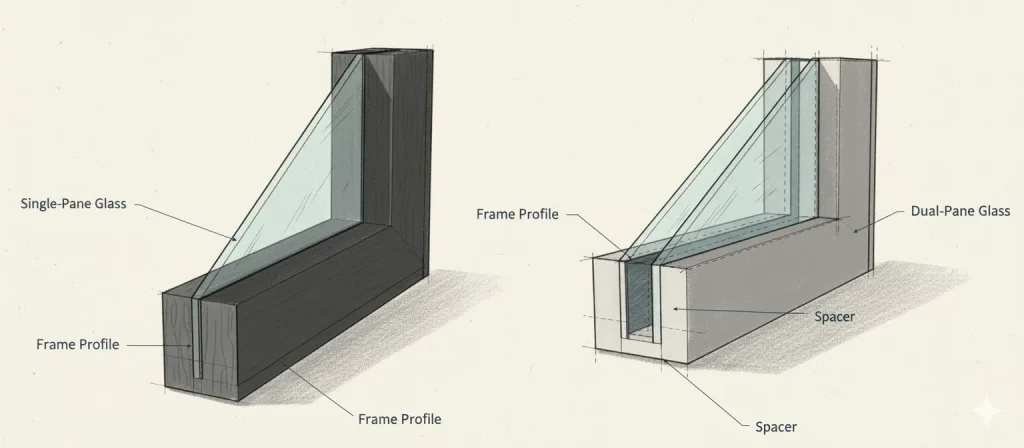
Single-glazed

One pane of glass set into the frame. The Australian standard for the last 100 years. Cheap, simple, performs to AS1288 if specified correctly. Almost every house built before 2010 in Sydney has it.

Double-glazed (IGU)

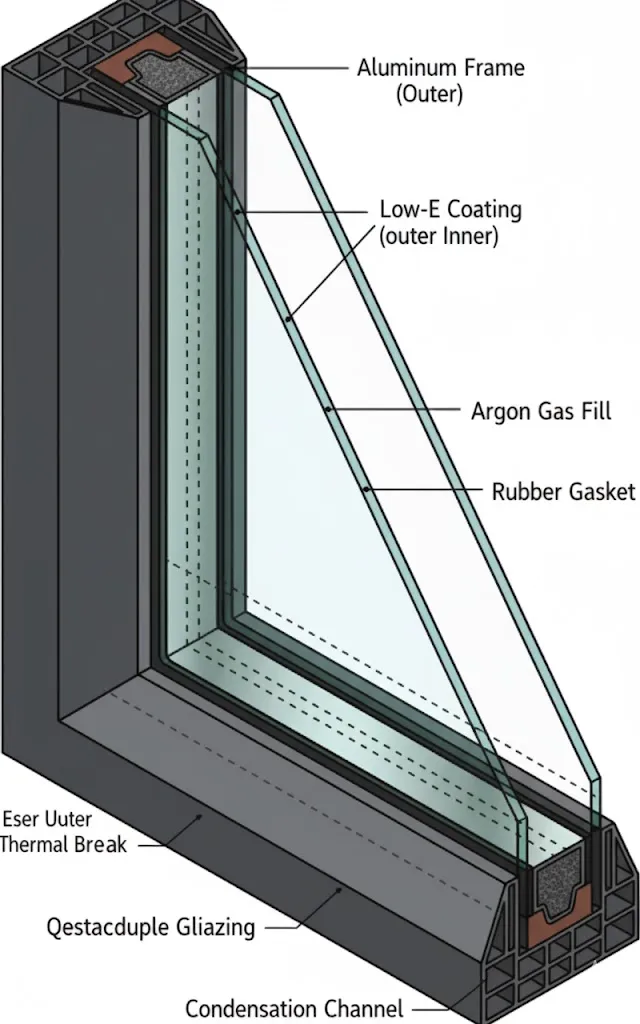
Two panes of glass separated by a sealed air or argon gas cavity (usually 6–16mm). The technical name is Insulated Glass Unit (IGU). The cavity dramatically reduces heat transfer and improves acoustic isolation. Now standard in new architectural builds.

Where each glazing type is commonly used

Single-glazed applications

  • Heritage buildings where double-glazing would alter the look
  • Secondary glazing where a primary IGU isn’t feasible
  • Non-critical locations (sheds, garages, internal partitions)
  • Where budget is the binding constraint

Double-glazed applications

  • Architectural new builds (now default)
  • Renovations focused on thermal comfort or noise
  • Homes near busy roads or under flight paths
  • Commercial facades with heavy glass-to-wall ratios
  • Retrofits to single-pane homes when the frames are being replaced anyway
Side by side

Single vs double-glazed – key metrics

Approximate values for a typical 1.2m × 1.0m residential window in Sydney.

Single (3mm float)Double (4-12-4 IGU)Double + Low-E + Argon
U-value (W/m²K) ~5.7~2.7~1.8
SHGC ~0.85~0.74~0.46
Acoustic Rw 25–28 dB32–36 dB34–38 dB
Condensation risk HighLowVery low
Approx weight (kg) ~9~22~22
Typical lifespan 25–40 years20–30 years (seal)20–30 years (seal)
WERS rating LowestMidHighest
Approx supplied $/m² $120–$200$280–$420$380–$600

Key benefits of double glazing

  1. Thermal insulation & energy savings. Double glazing typically halves window-driven heat transfer. In a Sydney summer, west-facing rooms feel dramatically cooler. In winter, heat retention improves measurably.
  2. Noise reduction. The sealed cavity dampens traffic, plane and outdoor noise. Acoustic IGUs (laminated outer pane) can cut perceived sound by half.
  3. Improved comfort & reduced condensation. Inner pane stays closer to room temperature – no cold downdraughts, dramatically less condensation in winter.
  4. Enhanced security & strength. Two panes are harder to break through than one. Optional laminated outer pane adds significant forced-entry resistance.
  5. Increased property value. NSW BASIX and energy-rating changes are making double-glazing a valuable selling point – particularly in the upper-end residential market.
  6. Long-term cost justification. Energy savings typically return the upgrade premium in 5–10 years. Comfort and noise benefits are immediate.

Drawbacks & considerations of double glazing

  1. Higher upfront cost. 30–80% more than equivalent single-glazed units, depending on spec.
  2. Potential for seal degradation. The hermetic seal between the panes is the weak point. Cheap units fail in 8–10 years; quality units last 20–30. Once the seal goes, the unit needs replacement (the gas escapes and condensation forms inside).
  3. Weight & frame compatibility. An IGU is roughly 2–2.5× heavier than a single pane. Older frames sometimes need to be upgraded to handle the load – that’s why pocket replacement isn’t always feasible.
  4. Repair complexity. A failed double-glazed unit is more expensive to replace than a single pane. You can’t patch an IGU – when it fails, the whole unit is replaced.
  5. Diminishing returns in mild climates. If your room never gets too hot or cold, and your street is quiet, the upgrade case is weaker.

When single glazing still makes sense

  • Heritage properties where the look matters more than the energy bill
  • Internal-only glazing where there’s no thermal/acoustic case
  • Sheds, garages, secondary structures
  • Where the existing frame can’t take an IGU and a frame replacement isn’t in scope
  • Tight-budget projects where the saving is better deployed elsewhere

Cost comparison & ROI for Sydney

Approximate figures from our 2025 jobs, supplied and installed:

  • Single-pane standard residential window: $450–$900
  • Double-glazed equivalent (4-12-4 IGU): $700–$1,400
  • Double-glazed Low-E + argon: $900–$1,800
  • Architectural / large-format: $1,800+
  • ROI on energy alone: typically 5–10 years in a Sydney home
  • Long-term value: double-glazing now showing up in real-estate listings as a selling feature

Choosing the right glazing for your project

Five questions:

  1. Is the window in a noise-affected location? (yes → double-glazed acoustic)
  2. Is the room west-facing or thermally exposed? (yes → double-glazed Low-E)
  3. Is this a heritage facade where the look matters? (yes → single-glazed, or slim-line IGU as a careful upgrade)
  4. Are the existing frames being replaced anyway? (yes → double-glazed always wins)
  5. What’s the budget per window? (under $700 → single is realistic; $700–$1,400 → mid IGU; $1,400+ → premium IGU territory)

What we recommend

For new builds and major renovations: double-glazing is now the default. For replacement projects: do bedrooms and main living rooms first, leave low-priority rooms (laundry, secondary bathroom) for later. Talk to us – 1300 854 726 – for a measure-and-spec.

Sydney expertise

Need a glazier or door specialist?

We've been fixing windows and doors across Greater Sydney for 30+ years. Free quote, fast turnaround, written warranty.

South Windsor, NSW

Visit Our Showroom

See our full range of high-performance aluminium windows and doors up close, including the complete Vantage and Elevate collections. Compare hardware, colours, glass and operation in person.

location_on27 Walker Street, South Windsor NSW 2765

schedule Mon–Fri: 7am–4pm · Sat: By Appointment